


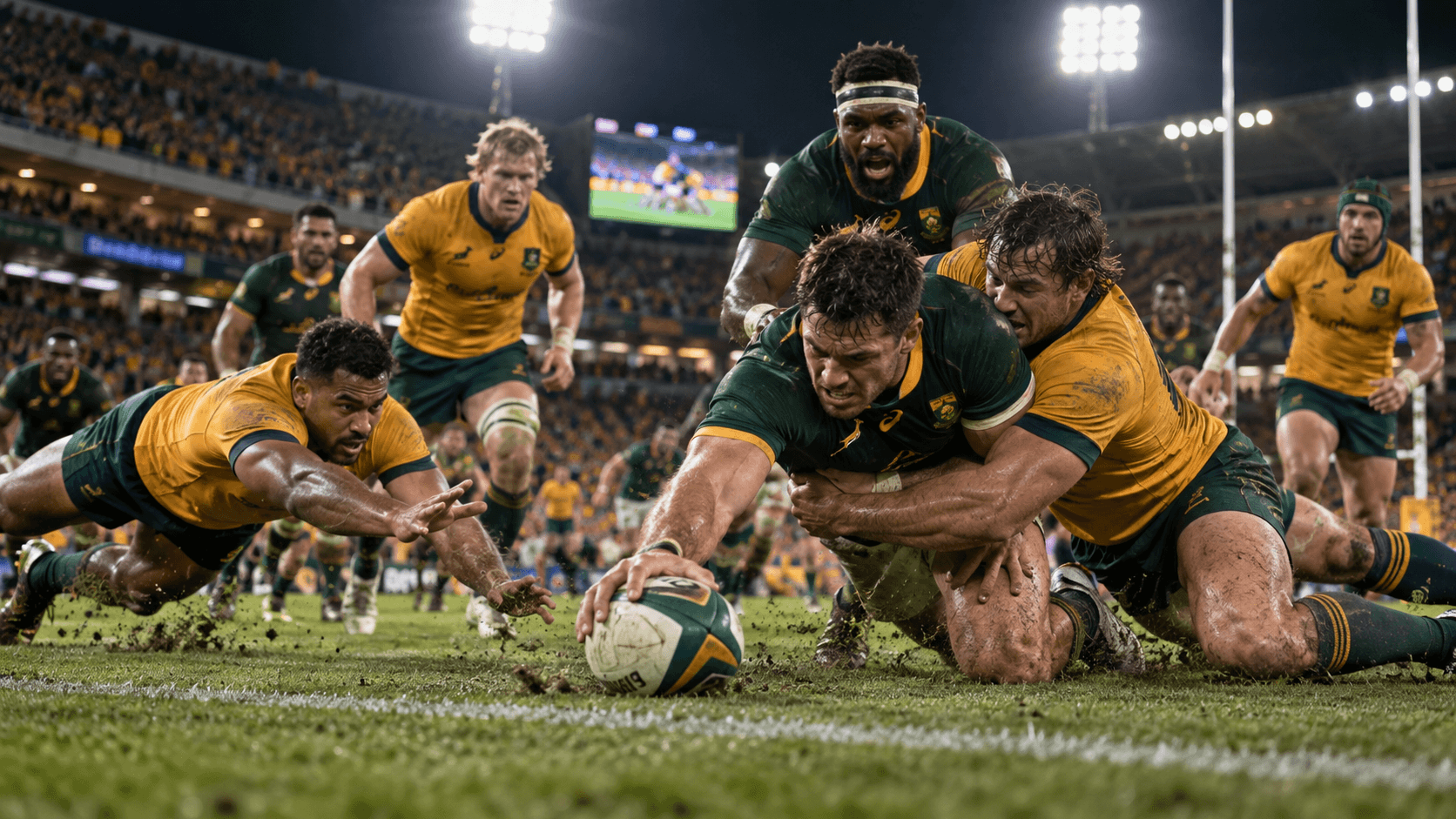
The Springboks suffered a dramatic 42-38 defeat to Australia at Optus Stadium in Perth on Sunday, after a remarkable late comeback fell just short against a Wallabies side that finished the closing stages with only 11 players.
Australia produced one of their strongest attacking performances of the season, racing into a commanding second-half lead before South Africa took advantage of four yellow cards to set up a frantic finish.
Despite scoring three late tries and getting to within four points, the Springboks could not complete the comeback as the Wallabies held on to reclaim the Mandela Challenge Plate.
Boks Make Strong Start
South Africa made 13 changes to the starting side for the one-off Test, with Andre Esterhuizen captaining the team.
Handre Pollard opened the scoring with an early penalty before hooker Johan Grobbelaar powered over from a rolling maul for his first Test try.
The Springboks appeared to have settled quickly, but Australia responded strongly.
Len Ikitau broke through the South African defence for the Wallabies’ opening try before striking again shortly afterwards when Australia capitalised on a loose ball.
South Africa hit back when Canan Moodie helped create space out wide and Edwill van der Merwe finished the move to level the scores at 17-17.
Wallabies Take Control
Australia regained the momentum just before halftime.
Flyhalf Ben Donaldson completed a sustained attacking move to put the Wallabies ahead, giving the hosts a 24-17 advantage at the interval.
The Wallabies increased the pressure after the restart.
Scrumhalf Ryan Lonergan kept the scoreboard moving from the kicking tee before Australia captain Harry Wilson powered over for another try in the 59th minute.
Just four minutes later, Max Jorgensen finished another sharp Australian attack to stretch the lead to 42-17.
At that stage, South Africa looked to be heading for a heavy defeat. Australia had played with greater pace and accuracy, while the Springboks struggled to find rhythm with a heavily changed starting combination.
Yellow Cards Change Everything
The entire complexion of the contest changed during the final quarter.
Wallabies captain Wilson was shown a yellow card for a high tackle on Malcolm Marx. Ryan Lonergan was then sent to the sin bin as South Africa were awarded a penalty try.
Joseph-Aukuso Suaalii followed after an offside infringement, leaving Australia with only 12 players.
Replacement scrumhalf Morne van den Berg took advantage when South Africa’s scrum created another attacking opportunity, crossing for a converted try to reduce the deficit.
The drama continued when Australia thought Tom Wright had scored an interception try that would have ended the contest. However, the score was disallowed after Hunter Paisami was penalised for head contact earlier in the move.
Paisami was also shown yellow, meaning Australia were temporarily reduced to just 11 players.
Nche Gives Boks Final Hope
With the Wallabies desperately trying to run down the clock, South Africa continued attacking.
Ox Nche eventually powered over for his first Springbok try as the final siren sounded, with the conversion reducing Australia’s lead to 42-38.
The Springboks still had one final opportunity from the restart.
However, Australia applied enough defensive pressure to force an obstruction error, finally bringing an extraordinary Test match to an end.
Wallabies Earn Famous Victory
The result completed a memorable afternoon for Australia under coach Les Kiss.
Ikitau finished with two tries, while Donaldson, Wilson and Jorgensen also crossed. Lonergan contributed four conversions and three penalties as Australia finished with five tries.
South Africa also scored five tries through Grobbelaar, Van der Merwe, Van den Berg and Nche, along with a penalty try.
The Springboks will be disappointed by the period in which Australia established their commanding advantage, but the late fightback showed their ability to remain dangerous even when a match appears lost.
For Australia, surviving the closing minutes with as few as 11 players made the 42-38 victory even more remarkable and ensured the Mandela Challenge Plate returned to Wallaby hands.